

20 Essential German Words Every Waiter Should Know Before Working in Austria
Starting a hospitality job in Austria? Learn the most common German words and phrases used by guests, managers, and restaurant staff every day.
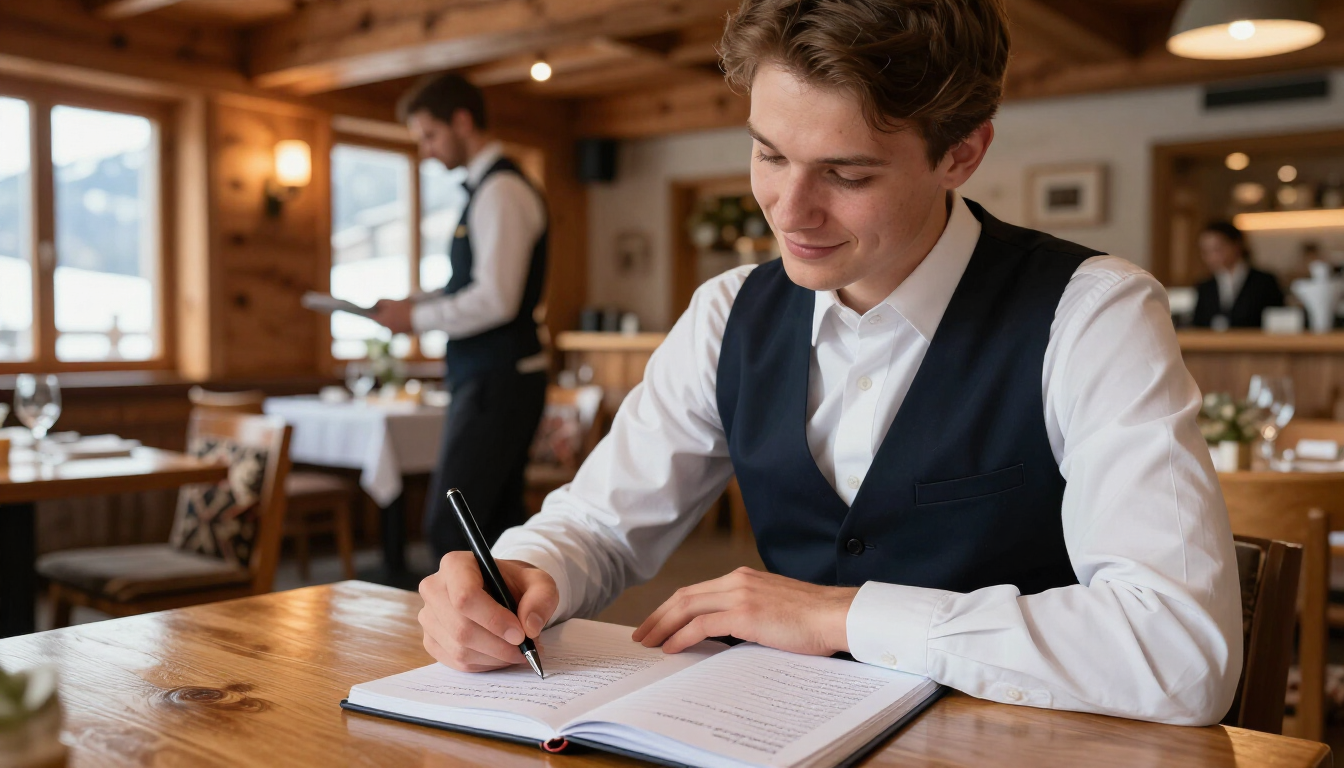
If you're planning to work in Austria this season, there's a good chance you're feeling excited, motivated... and maybe slightly nervous about the language. The good news?
You do not need perfect German to start a hospitality job in Austria.
Every year, thousands of international workers arrive in Austrian hotels, restaurants, bars, and mountain resorts with only basic German skills. Many start their first day knowing little more than "Hallo" and "Danke."
The secret is learning the vocabulary that you'll actually hear during a shift.
So instead of memorizing hundreds of random German words, let's follow a typical first day in an Austrian restaurant and learn the 20 most useful German words every waiter should know.
Whether you're looking for hospitality jobs in Austria, planning a seasonal job in the Alps, or preparing for your first restaurant position abroad, these words will make your life much easier.
Your First Day Working in Austria
It's 7:30 in the morning.
You've just arrived at a beautiful hotel in the Austrian Alps.
The mountains are covered in snow, the coffee smells amazing, and you're ready to impress your new employer.
Then your manager starts speaking German.
Fast German.
Very fast German.
Suddenly you begin questioning every life decision that brought you here.
Don't worry.
Let's decode what you're about to hear.
1. Guten Morgen
Meaning: Good morning
The first words you'll probably hear when entering the restaurant.
Example:
"Guten Morgen!"
Reply with:
"Guten Morgen!"
Congratulations. Your first conversation in German is complete.
2. Gast
Meaning: Guest
In hospitality, everything revolves around the guest.
Example:
"Der Gast wartet."
The guest is waiting.
And as you'll quickly learn, guests rarely enjoy waiting.
3. Tisch
Meaning: Table
One of the most important words in any restaurant.
Example:
"Tisch sieben."
"Tisch zwölf."
"Tisch drei möchte bestellen."
Even if you understand nothing else, knowing table numbers can save the day.
4. Bestellung
Meaning: Order
When you hear this word, pay attention.
Example:
"Neue Bestellung!"
A new order has arrived.
Time to move.
5. Getränke
Meaning: Drinks
Coffee, beer, wine, water, cocktails.
A large part of your day will involve this word.
Example:
"Getränke für Tisch sechs."
Drinks for table six.
6. Küche
Meaning: Kitchen
Your second home.
Sometimes your best friend.
Sometimes your biggest source of stress.
Example:
"Die Küche wartet auf die Bestellung."
The kitchen is waiting for the order.
7. Speisekarte
Meaning: Menu
One of the first things guests ask for.
Example:
"Kann ich die Speisekarte haben?"
Can I have the menu?
8. Reservierung
Meaning: Reservation
Very important in Austrian hospitality.
Especially during ski season and summer holidays.
Example:
"Haben Sie eine Reservierung?"
Do you have a reservation?
9. Rechnung
Meaning: Bill / Check
This is the word every waiter must know.
Example:
"Die Rechnung bitte."
The bill, please.
This sentence usually means your work has been successful.
Hopefully, a tip is coming next.
10. Zahlen
Meaning: To pay
Often heard together with "Rechnung."
Example:
"Ich möchte zahlen."
I'd like to pay.
Music to every waiter's ears.
The Lunch Rush Begins
It's now 12:30.
The restaurant is full.
The kitchen is busy.
Guests are arriving from everywhere.
This is where the next set of German words becomes useful.
11. Schnell
Meaning: Fast / Quickly
A word you'll hear more often than you'd like.
Example:
"Schnell, bitte!"
Quickly, please!
No pressure.
12. Frei
Meaning: Free / Available
Important when managing tables.
Example:
"Ist dieser Tisch frei?"
Is this table available?
13. Besetzt
Meaning: Occupied
The opposite of "frei."
Example:
"Dieser Tisch ist besetzt."
This table is occupied.
14. Service
Meaning: Service
A word used constantly in restaurants and hotels.
Example:
"Service bitte!"
Service, please!
Someone needs assistance.
Usually immediately.
15. Kellner
Meaning: Waiter
Congratulations.
That's you.
Many hotels nowadays simply use international job titles such as waiter, server, or service staff.
16. Trinkgeld
Meaning: Tip
Perhaps the most beautiful word in the German language.
Example:
"Das Trinkgeld ist für Sie."
The tip is for you.
This sentence can instantly improve your mood.
17. Bar
Meaning: Cash
A very useful word when processing payments.
Example:
"Bar oder mit Karte?"
Cash or card?
18. Karte
Meaning: Card
You'll hear it every day.
Especially as card payments become increasingly common across Austria.
Example:
"Mit Karte, bitte."
By card, please.
19. Feierabend
Meaning: End of work / Finished shift
Every hospitality employee's favorite word.
Example:
"Endlich Feierabend!"
Finally, the shift is over.
You survived.
20. Danke
Meaning: Thank you
Simple.
Powerful.
Essential.
Whether speaking with guests, colleagues, chefs, managers, or housekeeping staff, you'll never go wrong with "Danke."
In hospitality, politeness is part of the job.
Bonus Phrase: The Sentence You'll Hear Hundreds of Times
"Noch ein Bier, bitte."
Translation: One more beer, please.
If you're working in Austria, especially in a mountain resort, you'll hear this sentence more times than you can count.
By the end of the season, you'll probably understand it before the guest finishes saying it.
Do You Need German to Work in Austria?
One of the most common questions we receive at NorthPeak Staffing is:
"Can I work in Austria if I don't speak German?"
The answer is yes.
Many Austrian hotels and restaurants actively hire international workers who speak English and only basic German.
However, learning even a small amount of German can make a huge difference.
Employees with basic German skills often:
- Adapt faster
- Communicate better with guests
- Receive more responsibilities
- Feel more confident at work
- Have better long-term career opportunities
You don't need fluency.
You simply need enough German to handle everyday situations.
And these 20 words are an excellent place to start.
Why Austria Is One of the Best Countries for Hospitality Jobs
Austria remains one of Europe's most attractive destinations for hospitality professionals.
Many positions offer:
- Competitive salaries
- Staff accommodation
- Meals during shifts
- International working environments
- Opportunities for career growth
- Stunning mountain locations
For many people, a seasonal job in Austria becomes the beginning of an international hospitality career.
Frequently Asked Questions
-Can I work in Austria with English only?
Yes. Many hotels and restaurants hire English-speaking staff, particularly in tourist areas and international resorts.
-How much German do I need for hospitality jobs in Austria?
Basic conversational German is usually enough for entry-level hospitality positions. Learning common workplace vocabulary can significantly improve your experience.
-What is the most important German word for waiters?
"Rechnung" (bill) is one of the most useful words, but understanding terms like "Tisch," "Bestellung," and "Getränke" is equally important.
-Is Austria a good country for seasonal work?
Yes. Austria offers excellent opportunities in hospitality, especially in ski resorts and tourism regions where employers regularly hire international staff.
-Can beginners find hospitality jobs in Austria?
Absolutely. Many employers value attitude, reliability, and customer service skills as much as previous experience.
Ready to Start Your Hospitality Career Abroad?
Learning a few German words is a great first step.
Finding the right employer is the next one.
At NorthPeak Staffing, we help hospitality professionals connect with hotels and restaurants across Austria, Germany, and the Netherlands. Whether you're looking for your first seasonal position or your next career move, we're here to help you find opportunities that match your experience, goals, and lifestyle.
Because sometimes a new job abroad starts with just one word.
"Guten Morgen."